
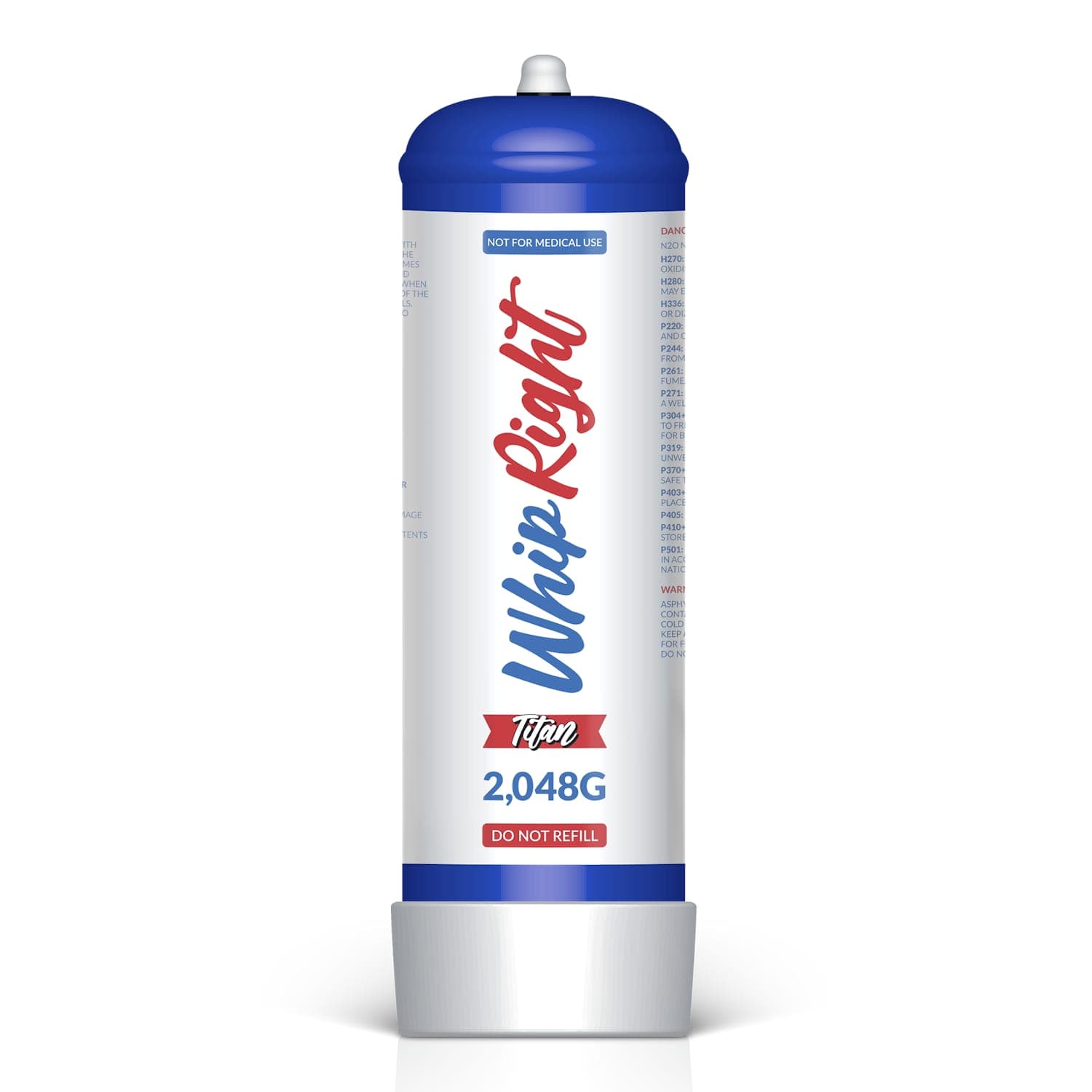
Nitrous Oxide Tank Safety & Disposal
Safe handling matters. This guide covers practical storage, handling, and end-of-life checks for culinary nitrous oxide tanks and cream chargers.
18+ Policy And Purchase Rules
Some nitrous oxide products are age-restricted. Proof of age may be required before purchase or delivery.
Follow local laws, product labels, and manufacturer instructions. Whipco products are supplied for culinary use only.
Orders may be refused if age, identity, safety, or misuse concerns cannot be resolved.
Safe Handling And Storage
- Store tanks and chargers in a cool, dry, well-ventilated place
- Keep products away from heat, flames, and direct sunlight
- Secure larger tanks so they cannot tip, roll, or be damaged
- Check fittings, valves, seals, and threads before use
- Do not use damaged, corroded, leaking, or visibly compromised products
Disposal And Recycling
Spent steel cream chargers may be recyclable when fully empty, but local council rules vary. Check your local waste guidance before disposal.
Larger tanks may need supplier return, manufacturer instructions, or a specific recycling pathway. Do not assume they can go into ordinary household recycling.
Never pierce, crush, burn, or heat a charger or tank. If you are unsure whether an item is empty or safe to dispose of, contact your supplier or local waste authority.
When Not To Use A Tank Or Charger
Do not use a cylinder, charger, valve, or fitting if it looks damaged, corroded, swollen, or modified.
Stop immediately if you hear persistent hissing, notice a poor seal, or see visible damage.
If a product appears unsafe, isolate it from heat and contact the supplier for guidance.
Using Products Responsibly
Use cream chargers, tanks, dispensers, and nozzles only with compatible equipment.
Do not inhale nitrous oxide or supply products to anyone you believe may misuse them.
If you need help choosing compatible culinary equipment, contact Whipco before ordering.
FAQs
Can I recycle empty cream chargers?
Often yes, but only when they are fully empty and accepted by your local recycling rules. Check your council guidance before disposal.
How do I know a charger or tank is empty?
Follow the manufacturer instructions. Do not pierce, heat, crush, or use unsafe testing methods.
What should I do if a tank looks damaged?
Do not use it. Keep it away from heat, avoid further handling, and contact the supplier or relevant waste authority for guidance.
Can tanks go in household recycling?
Not always. Larger tanks may require return or specialist recycling, depending on the product and local rules.